Guide
Does cutting hair help frizz?
Partly: a women’s haircut takes off length from the ends, where hair is most worn, and wear adds to tangling and frizz. On wavy or curly hair, length changes something else: where the wave or curl shows. The top of a hanging hair carries the weight of the whole length below it, and the tip carries none, so on longer hair a wave or curl is pulled straighter near the top and shows more towards the ends. Frizz from damp air has its own guide: frizzy hair in humidity.
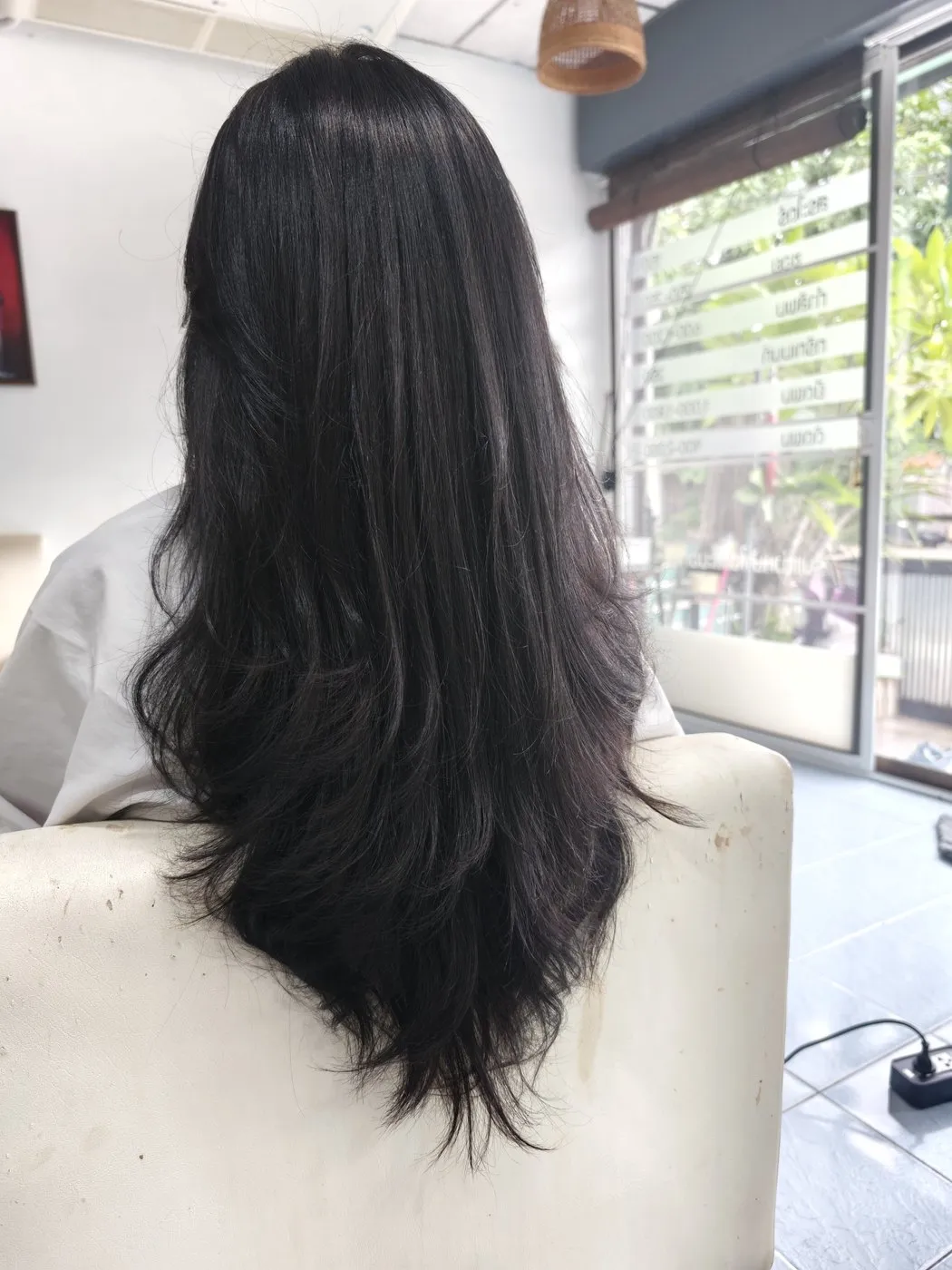
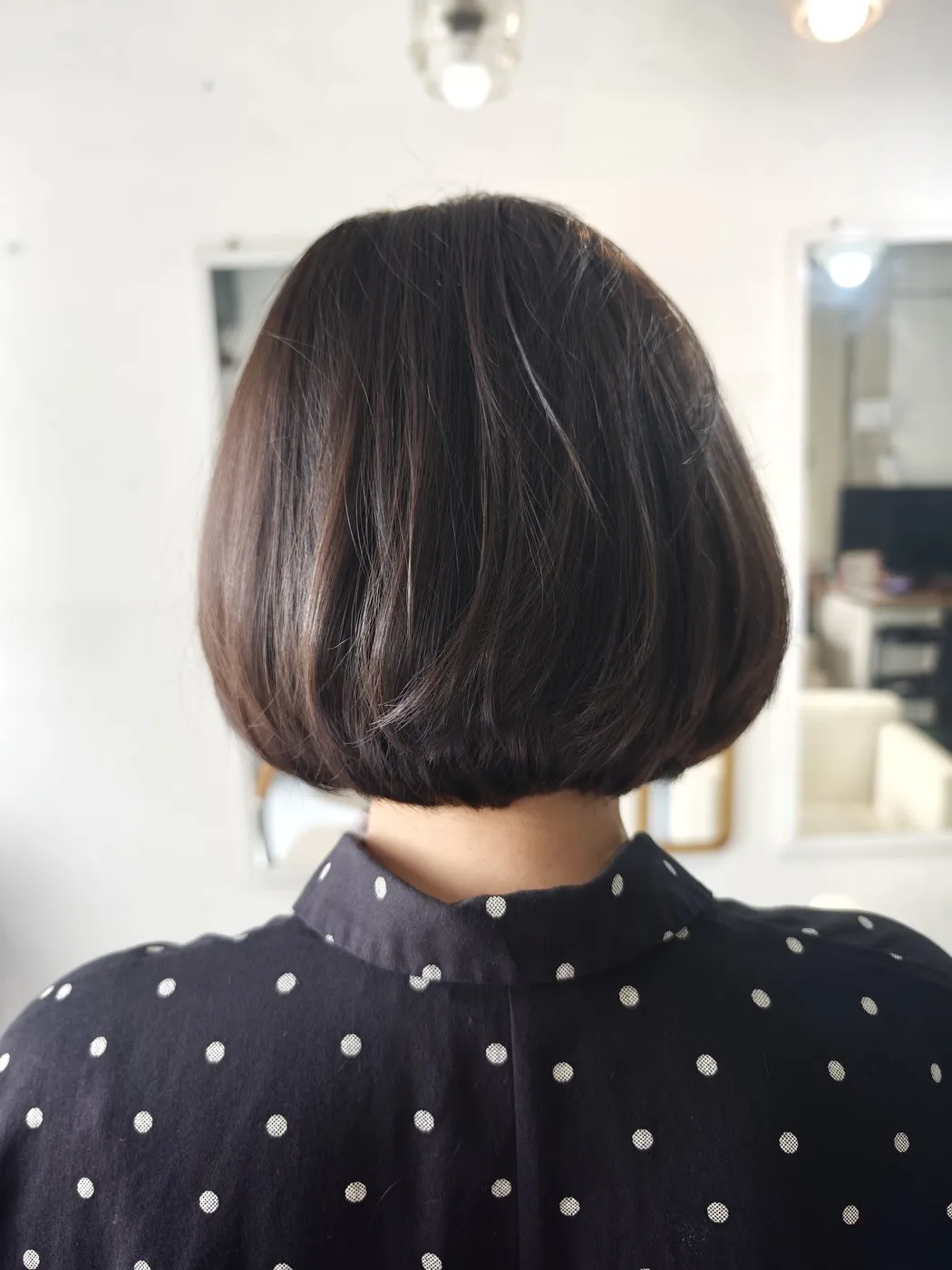
What does a cut take off?
Wear builds up along each hair from the root to the tip, so the end has the most. A cut takes the end off, and with it the hair that would split. How often to cut is covered in our guide on how often to trim hair.
How does length change a wave or curl?
Every hair hangs from your scalp, so each part of it carries the weight of the length below. The top has the most length below it, and the tip has none. That weight pulls a wave or curl straighter near the top, so the wave or curl shows more towards the ends. On shorter hair there is less length below, so there is less pull at the top.
Which of these is yours
If your frizz sits mostly at the ends, that worn length is what a cut removes. If your hair is wavy or curly and straight near the top, that is where the weight below pulls hardest, and length sets how much weight there is. If your frizz is all over and worse in the rains, damp air plays a part, and our guide to frizzy hair in humidity explains what to do.
If you’d like to come in, you can book here.